




Jensen Huang’s recent Beijing food tour accidentally gave the perfect answer.
A lot of travelers assume visiting China is impossible without speaking Chinese. Then the NVIDIA CEO went to Beijing and did exactly what every curious tourist wants to do: walk around, try random street food, point at menus, and react honestly when something tasted weird.
That’s why the videos spread so fast. Not because he’s a celebrity CEO. Because the experience looked surprisingly relatable.
One minute he was eating 炸酱面 (Zhá jiàng miàn), Fried Sauce Noodles, on a sidewalk. The next minute he tried 豆汁儿 (Dòu zhīr), Fermented Mung Bean Juice, and immediately started searching for something sweet to recover from the taste.
And honestly? That’s exactly what traveling in China feels like. Some things are incredible. Some things are confusing. Some things taste amazing. Some things make you question your life choices.
But here’s the interesting part. To do almost all of it, you only need a surprisingly small amount of Chinese.
Stop 1: 炸酱面 (Zhá jiàng miàn) – Fried Sauce Noodles
One of the most talked about moments from Jensen Huang’s Beijing trip happened outside a very normal noodle shop. No VIP room. No fancy restaurant. Just a bowl of noodles and a crowd filming him while he ate on the sidewalk.
炸酱面(Zhá jiàng miàn) is one of Beijing’s classic comfort foods: thick wheat noodles, savory soybean paste, crispy vegetables, and minced pork mixed together. It’s salty, rich, filling, and honestly very hard to dislike. If you visit Beijing, this is probably one of the safest “first local foods” to try.
How to order it:
Lǎobǎn, yī wǎn zhájiàngmiàn.
老板,一碗炸酱面。
Boss, one bowl of fried sauce noodles.
That’s it. One sentence.
Here’s something many visitors don’t realize about China: people become dramatically friendlier the moment you attempt even basic Chinese. Even imperfect pronunciation usually gets a smile.
And once the food arrives, you’ll probably use this phrase constantly:
Hǎochī!
好吃!
Delicious!
Stop 2: 豆汁儿 (Dòu zhīr) – Fermented Mung Bean Juice
Then came 豆汁儿(Dòu zhīr). If you ask Beijing locals what food scares foreign visitors the most, this drink will probably appear near the top. It’s gray green. Sour. Fermented. And famously difficult for first timers. Even many Chinese people from outside Beijing don’t enjoy it.
Jensen Huang’s reaction went viral because it was exactly the reaction most foreigners have after the first sip.He looked at the bottle, looked at the crowd, and said:
Zhè shénme wán yìr?
这什么玩意儿?
What the heck is this thing?
The crowd laughed. He made a face. He didn’t pretend to like it. He didn’t fake politeness. He just reacted honestly.
But here’s the thing: trying weird food is part of the fun of traveling in China. Sometimes the best travel memories come from ordering something you completely don’t understand.
The most useful sentence for this moment:
Zhè shì shénme?
这是什么?
What is this?
You will use this constantly in China. Street food. Snacks. Tea shops. Night markets. And surprisingly often, asking this question starts conversations with locals.
If you don’t like something, politely say:
Bù le, xièxie.
不了,谢谢。
No thanks.
Simple, useful, and much more natural than sounding overly formal.
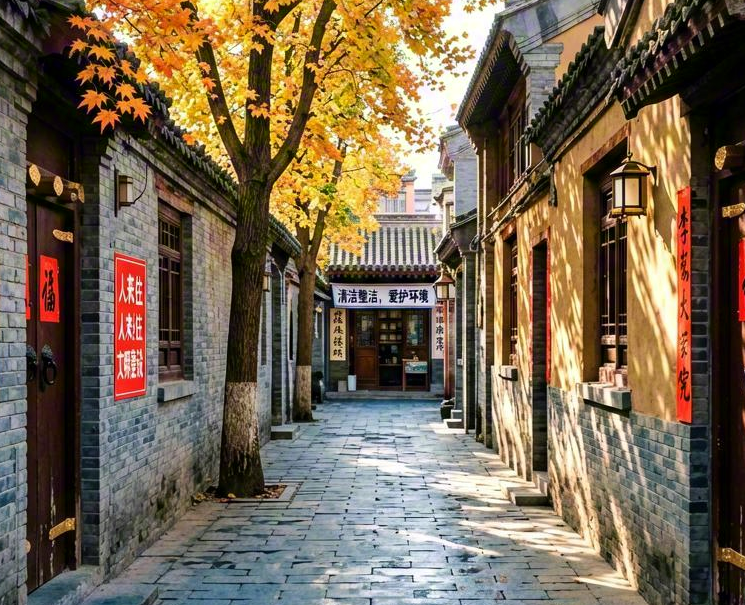
Stop 3: 南锣鼓巷 (Nán luó gǔ xiàng) – Beijing’s Most Famous Hutong
A big part of Jensen Huang’s food tour happened around 南锣鼓巷(Nán luó gǔ xiàng), one of Beijing’s most famous hutong areas. This is where old Beijing collides with modern tourist chaos. Tiny alleyways. Crowded snack shops. Tea stores. Street food smoke everywhere. People carrying giant squid skewers while trying not to spill milk tea. It’s loud, crowded, slightly overwhelming, and incredibly fun.
This is also where many travelers discover an important truth: you do not need fluent Chinese to survive in China. You just need confidence plus a few survival phrases.
The most powerful sentence in your arsenal:
Wǒ yào zhège.
我要这个。
I want this one.
Honestly, this sentence alone can carry you through half the country. Point at the picture. Say the sentence. Success.
Stop 4: 铁板鱿鱼 (Tiě bǎn yóu yú) – Teppanyaki Squid
If you walk through 南锣鼓巷(Nán luó gǔ xiàng) , you will probably smell 铁板鱿鱼(Tiě bǎn yóu yú) before you even see it. The sound is impossible to miss: sizzling squid hitting a hot metal grill, vendors brushing on sauce, cumin and chili powder filling the air. It is one of those foods that instantly feels like traveling in China.
Ordering street food can feel intimidating at first, especially when there is a long line behind you. But most interactions are actually very short and simple.
What to say:
Liǎng chuàn tiěbǎnyóuyú.
两串铁板鱿鱼。
Two squid skewers.
If you cannot handle spicy food:
Bú yào là.
不要辣。
No spice.
Or if you want to be brave, but not too brave:
Yì diǎndiǎn là.
一点点辣。
A little spicy.
And of course, you will need this:
Duōshao qián?
多少钱?
How much?
Since mobile payments are everywhere in China, many travelers quickly learn another useful sentence:
Sǎo nǎlǐ?
扫哪里?
Where do I scan?
Stop 5: 奶皮子酸奶 (Nǎi pí zi suān nǎi) – Milk Skin Yogurt
After trying challenging Beijing snacks, many visitors eventually discover 奶皮子酸奶(Nǎi pí zi suān nǎi) . And honestly, this is where confidence usually returns. It is cold, creamy, slightly sweet, and much easier for international travelers to love immediately. The thick milk skin on top surprises many first time visitors, but most people end up finishing the entire cup.
Ordering it is simple:
Yì bēi nǎipízisuānnǎi.
一杯奶皮子酸奶。
One milk skin yogurt.
At this point, most travelers suddenly realize something important: China becomes dramatically more enjoyable the moment you stop feeling afraid to interact. Not fluent. Not perfect. Just willing to try.
So, How Much Chinese Do You Actually Need?
Probably less than you think.
The funniest thing about Jensen Huang’s Beijing trip is that he never looked like someone trying to master Chinese. He just looked curious. And honestly, curiosity gets you surprisingly far in China.
Most travelers do not need years of study before visiting. They just need practical phrases, listening confidence, and some idea of how real interactions actually work. That is why practical Chinese matters so much more than textbook Chinese when you travel.
Here is the revised final section, slightly longer and more detailed while staying focused on the free trial and ebook offer.
Ready to Travel with Confidence?
At eChineseLearning, we focus on one thing: helping you actually use Chinese in real situations in China. Not textbook dialogues. Not memorizing grammar rules. But the exact phrases you will need in real life:
- ordering food in Beijing
- asking for directions in a hutong
- taking a taxi without confusion
- buying snacks in a street market
- handling simple conversations with confidence
That’s why our students don’t just “study Chinese”, they practice the kind of Chinese that works the moment they land in China.
Try it for free first
You can start with a free trial lesson to see how it works in practice. During your trial, your tutor will:
- assess your current level in a simple, stress-free way
- show you how to pronounce key travel phrases naturally
- help you fix the small mistakes that usually cause confusion in real conversations
- and build a mini “China travel phrase set” tailored to your trip
No pressure. No commitment. Just a real lesson experience. You’ll also receive a free travel guide. After your free trial, you’ll get our downloadable ebook: “China Travel Survival Chinese (2026 Edition)”. It’s designed to be your “save me in China” guide, especially if it’s your first trip.
Start your free trial today
Tell us where you plan to travel, Beijing, Shanghai, Chengdu, or anywhere else, and we’ll make your first lesson focused entirely on that scenario.
Because the difference between a stressful trip and an amazing one is often just a few sentences you actually know how to use.
And sometimes, that’s all it takes to go from pointing at menus…to actually enjoying the conversation.
Quiz: 驴打滚 (Lǘ dǎ gǔn) – “Donkey Roll”. What is it?
A. A rolled pancake with donkey meat inside
B. A sweet dessert made of glutinous rice and red bean paste, rolled in soybean flour
C. A type of noodle soup from Beijing
