




If you’re reading this, you’ve probably heard the warnings. Chinese is one of the hardest languages in the world. The tones will break you. The characters will take years. You’ll never reach fluency. Maybe you’ve even told yourself these things.
But here’s what’s strange. Talk to people who have actually learned Chinese to a high level, and you’ll hear something different. Many of them will tell you that after a certain point, Chinese became easier than English. Not easier in the beginning, of course. But easier in the long run. How can that be true? The answer lies in how Chinese words are built.
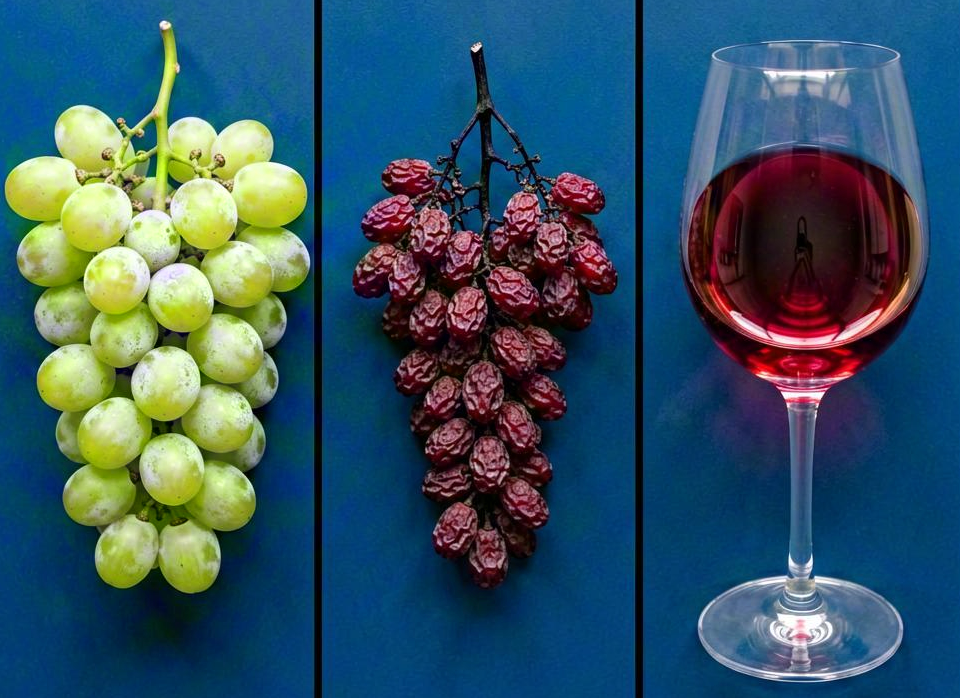
Let me give you a simple example. In English, the words grape, raisin, and wine have nothing in common. You can’t look at raisin and guess it has anything to do with grapes. You can’t see wine and know it comes from grapes either. Each word is a separate memory you have to store and retrieve.
Now look at Chinese:
· 葡萄 (pú tao) means grape
· 葡萄干 (pú tao gān) means raisin. It’s literally “dried grape”
· 葡萄酒 (pú tao jiǔ) means wine. It’s literally “grape alcohol”
Once you know the word for grape, the other two are not really new words anymore. You see the parts and you understand the meaning instantly. No dictionary needed. Chinese words often explain themselves right on the surface. This is the hidden logic that makes everything easier down the road.
Beginning Is Tough
I won’t lie to you: the first few months of Chinese feel hard. The tones are strange, the characters look like mysterious symbols, and your hand has no idea how to write them. Most people feel lost at this stage. You might even wonder if you’re just “bad at languages.”
You’re not. Chinese is simply front-loaded. This means the hardest part comes first. You pay a big price at the start, but what you’re actually doing is laying a foundation. And once that foundation is down, everything else starts to click. The mountain is steepest right at the bottom. After that, the slope gets gentler and gentler.
Stop Memorizing, Start Building
In English, learning vocabulary often feels like collecting individual stones. Every new word is a brand new shape you have to pick up and carry. There’s no pattern, no shortcut. Just more memory work.
Chinese works differently. Learning Chinese is like getting a set of Lego bricks. At the very beginning, you’re just collecting pieces. That’s your brick. Once you have it, you don’t need to collect entirely new objects anymore. You just start building.
Take 电 (diàn), which means “electric.” Learn it once, and suddenly you can build:
- 电话 (diàn huà) — Telephone (electric + speech)
- 电脑 (diàn nǎo) — Computer (electric + brain)
- 电视 (diàn shì) — Television (electric + vision)
- 电影 (diàn yǐng) — Movie (electric + shadow)
Now take 心 (xīn), which means “heart.” One character opens an entire emotional world:
- 开心 (kāi xīn) — Happy (open + heart)
- 伤心 (shāng xīn) — Sad (hurt + heart)
- 担心 (dān xīn) — Worried (carry + heart)
- 小心 (xiǎo xīn) — Careful (small + heart)
- 关心 (guān xīn) — To care about (close + heart)
Notice what’s happening. You’re not memorizing nine separate words. You’re looking at combinations and thinking, “Oh, that makes sense.” An open heart means happy. A hurt heart means sad. A heart you carry means worry. This is the shift. You stop being a memorizer and start being a builder.
Small Set of Bricks, Huge Number of Words
Here’s a number that surprises most learners: a literate Chinese speaker knows about 2,400 characters. That might sound like a lot right now. But with those 2,400 pieces, you can understand over 40,000 words.
40,000 words from 2,400 characters. How is that possible? Because you’re not learning 40,000 isolated items. You’re learning how to combine a manageable set of bricks into an enormous vocabulary. Every new character you learn doesn’t just add one word to your brain. It unlocks an entire family of words. The hard work you do at the start keeps paying off long after.
Your First Brick Starts Here
The hidden logic of Chinese is real, and it’s waiting for you. But it’s hard to see when you’re still struggling with the basics. That’s where a good teacher makes all the difference. At eChineseLearning, we don’t just push you to memorize. We show you the patterns. We help you see the Lego bricks so you can start building, not just carrying.
And the best way to see how this works? Experience it yourself. Book a free trial lesson with us. No pressure, no commitment. Just a real session with a real teacher who will help you place that first brick. Once you see how it fits, you’ll understand why Chinese gets easier, and more fun, the further you go.
Quiz: “放鸽子” (fàng gē zi) literally means “release a pigeon.” What does it actually mean?
A. To celebrate
B. To stand someone up
C. To send a message
D. To give up

Answer: B